
In today’s fast-paced world, children need more than basic academic knowledge to thrive. Cognitive skills, mental agility, and problem-solving capabilities define future success. Among various brain development tools, Abacus Classes Brain Development have emerged as a revolutionary way to enhance mental capabilities. These classes don’t merely teach arithmetic—they stimulate both hemispheres of the brain, improving memory, concentration, and analytical thinking. By integrating visual, tactile, and auditory learning, abacus training provides children a unique platform to excel not only in mathematics but also in life skills.
Understanding the Concept of Abacus
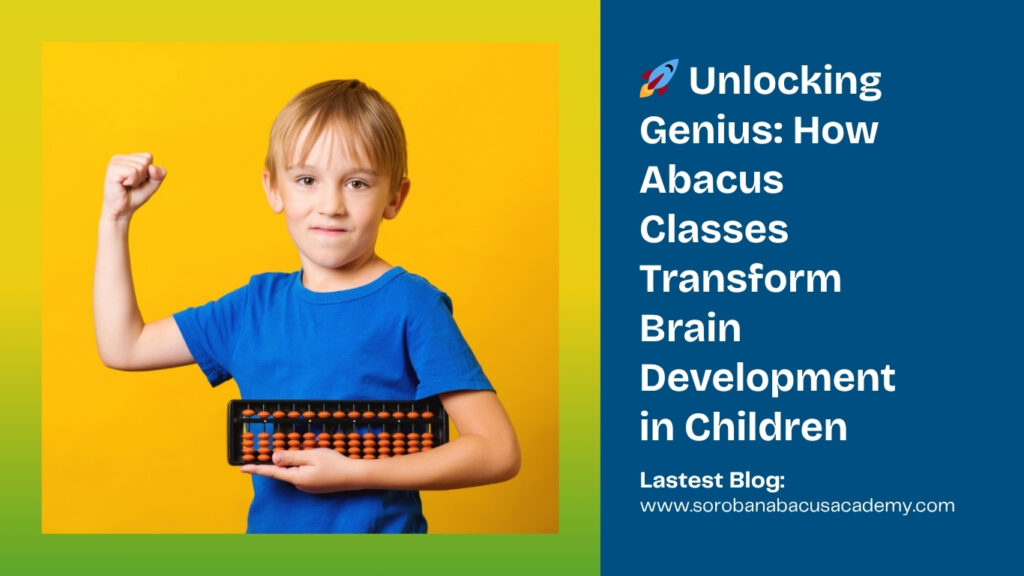
The abacus, often called a “manual calculator,” has a history spanning thousands of years. Originating in ancient China and later evolving in Japan, it is much more than a counting device. The tool’s structure allows children to visualize numbers, turning abstract concepts into tangible actions. Every movement of beads across rods encourages simultaneous mental processing and hand coordination. This dual stimulation nurtures the brain’s right hemisphere, which governs creativity, imagination, and visual-spatial intelligence, while the left hemisphere handles logic, calculation, and sequential thinking.
Cognitive Benefits of Abacus Classes
1. Enhanced Memory and Retention
Abacus learning strengthens working memory by requiring students to hold numbers and patterns mentally while performing calculations. Over time, children develop exceptional recall abilities, improving performance in academics and daily problem-solving.
2. Improved Concentration
Tracking beads, performing complex calculations, and visualizing results demand intense focus. Regular abacus practice trains children to sustain attention for extended periods, a skill crucial for academic excellence and personal growth.
3. Sharpened Analytical Skills
Abacus learners gradually grasp number patterns and relationships, enhancing logical reasoning. This ability translates into better decision-making and problem-solving in subjects beyond mathematics, including science, coding, and strategic games.
Physical and Neurological Impact
Studies show that abacus training triggers neuroplasticity, allowing the brain to form new neural connections. This activity stimulates both hemispheres, improving mental speed and processing ability. Fine motor skills also benefit, as children coordinate their hand movements with mental visualization. Consequently, children demonstrate improved hand-eye coordination, reaction time, and spatial awareness.
Age-Appropriate Learning with Abacus
Abacus Classes Brain Development cater to children as young as three years old, progressing gradually to advanced levels. Early exposure is critical because the formative years are when the brain’s plasticity is at its peak. Beginners start with simple counting and basic addition, while advanced learners tackle complex multiplication, division, and mental calculations without physical beads. This gradual yet structured progression ensures children build confidence and mental resilience.
Abacus and Academic Excellence
Mathematics is often a challenging subject for many students. However, abacus-trained children develop a deeper understanding of numerical relationships. Their ability to perform mental calculations quickly and accurately reduces reliance on calculators. Studies have found that these children outperform peers in arithmetic, logical reasoning, and even science-based problem-solving. Furthermore, the confidence gained through consistent progress boosts overall academic performance.
Life Skills Gained Through Abacus Training
Beyond academics, abacus classes foster essential life skills:
- Time Management: Solving mental calculations efficiently teaches children to manage tasks under time constraints.
- Discipline: Regular practice instills routine and commitment.
- Confidence: Achieving milestones in calculations builds self-assurance in personal and academic settings.
By cultivating these skills early, children are better prepared to face challenges in various spheres of life.
Role of Visualization in Mental Calculations
Visualization is central to abacus learning. As students advance, they no longer rely on physical beads. Instead, they perform complex operations mentally, visualizing each bead’s position. This process significantly enhances the brain’s imaginative capabilities and memory retention. The mental imagery technique used in abacus learning aligns with modern cognitive research, showing that visualization strengthens neural networks involved in both logical and creative thinking.
Abacus for Different Learning Styles
Children have unique learning preferences—visual, auditory, or kinesthetic. Abacus training caters to all three:
- Visual learners benefit from watching beads move across rods.
- Auditory learners gain from verbal instructions and counting aloud.
- Kinesthetic learners thrive through tactile interaction with the abacus.
This multi-sensory approach ensures inclusivity and optimizes brain development for every child.
Abacus Classes vs. Traditional Math Methods
Unlike conventional math methods, which often rely on rote memorization, abacus training emphasizes mental agility. Traditional learning can lead to stress, boredom, or slow progress. Abacus classes make calculations engaging, interactive, and hands-on. This method reduces math anxiety while fostering curiosity and love for numbers. Over time, children exhibit faster problem-solving abilities, better mental clarity, and enhanced confidence in academics.
Parent’s Role in Supporting Abacus Learning
Parental involvement significantly influences a child’s success in abacus classes. Encouraging daily practice, celebrating achievements, and creating a distraction-free learning environment strengthens motivation. Parents can participate by practicing simple exercises, reviewing progress, and understanding the child’s learning pace. This collaboration nurtures a positive mindset, ensuring long-term benefits.
Technology Integration in Abacus Learning
Modern abacus classes often combine traditional bead-based learning with digital apps. Interactive online tools simulate bead movement, track progress, and provide instant feedback. This hybrid approach maintains engagement, especially in tech-savvy children. Digital platforms also allow learning flexibility, making abacus training accessible even for children with busy schedules or remote learning needs.
Global Recognition and Competitions
Abacus Classes Brain Development are celebrated worldwide. International competitions motivate children to excel while benchmarking their abilities globally. These contests test mental calculation speed, accuracy, and visualization skills. Participating in such events instills discipline, sportsmanship, and goal-setting, reinforcing the long-term cognitive and personal benefits of abacus training.
Addressing Common Misconceptions
Some parents mistakenly believe that abacus is only for mathematically gifted children. In reality, abacus classes are designed for all learners. The method enhances innate abilities and fosters confidence, even in children who initially struggle with math. Another myth is that abacus training is time-consuming. In fact, consistent short practice sessions are more effective than extended, irregular study hours.
Tips for Choosing the Right Abacus Class
Selecting a quality abacus program ensures maximum brain development benefits. Parents should consider:
- Qualified Instructors: Experience and teaching style matter.
- Structured Curriculum: A clear progression from beginner to advanced levels.
- Student Engagement: Interactive lessons and hands-on activities.
- Regular Assessment: Monitoring performance to identify areas of improvement.
Choosing the right class ensures children gain confidence, skill, and long-term cognitive growth.
Success Stories of Abacus Learners
Countless children have demonstrated remarkable growth after abacus training. Many report improved academic scores, heightened concentration, and enhanced memory. Some have achieved extraordinary mental calculation feats, solving complex problems within seconds. Beyond numbers, these children develop a love for learning, discipline, and self-motivation, highlighting the transformative power of abacus classes for brain development.
Conclusion
Abacus classes for brain development provide far-reaching benefits beyond arithmetic skills. From enhanced memory and concentration to improved problem-solving and life skills, these classes cultivate holistic cognitive growth. They equip children to face academic challenges confidently and develop mental agility that lasts a lifetime. By integrating traditional techniques with modern learning tools, abacus training ensures children not only excel in mathematics but also thrive in all aspects of intellectual and personal growth. Investing in abacus classes is not just about teaching numbers—it’s about nurturing brilliance, creativity, and lifelong learning potential.