
The Rubik’s Cube has fascinated millions across the world for decades. At first glance, it may seem confusing, colorful, and even impossible to solve. However, once you understand the logic behind it, the puzzle becomes an exciting challenge rather than a frustrating task. If you want to learn rubik cube for beginners, you are in the right place. This guide breaks everything down into simple steps that anyone can follow.
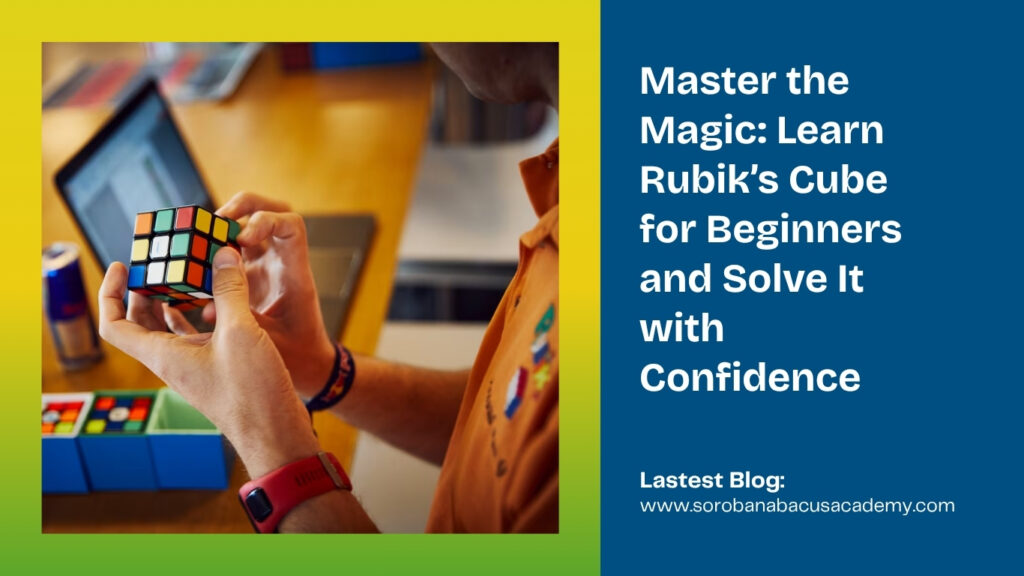
Moreover, learning this puzzle improves focus, memory, and problem-solving skills. Many beginners believe they need exceptional intelligence to solve it, yet that is not true. With the right approach, patience, and practice, anyone can master it. Therefore, this blog will guide you step by step with clear explanations, helpful transitions, and easy-to-understand instructions.
Understanding the Rubik’s Cube Structure
Before you start solving, you must understand how the cube works. The Rubik’s Cube consists of smaller pieces called cubies. These include center pieces, edge pieces, and corner pieces. Each piece plays a specific role in the puzzle.
The center pieces never move from their position. They define the color of each side. On the other hand, edge pieces have two colors, while corner pieces have three colors. Once you understand this structure, solving becomes much easier.
In addition, each move you make rotates a layer. These rotations follow a fixed system. Therefore, learning the cube’s structure helps you avoid confusion later.
Basic Notations You Must Know
To learn rubik cube for beginners, you must understand basic notations. These notations represent moves you will perform. For example, the letter “R” means turning the right face clockwise. Similarly, “L” stands for the left face, “U” for the top, and “D” for the bottom.
If a letter has an apostrophe, it means turning that face counterclockwise. For instance, “R’” means turning the right face in the opposite direction. Also, “2” means turning the face twice.
Although these symbols may look complicated at first, they become easy with practice. Once you get comfortable with them, you can follow any algorithm smoothly.
Start with the White Cross
The first step to learn Rubik’s Cube for beginners is creating the white cross. In this step, you align four white edge pieces around the white center. Each edge must match the color of the adjacent center piece.
Instead of rushing, take your time to observe the cube. Look for white edges and position them correctly. While doing this, ensure that the side colors also match. This step builds the foundation for the entire solution.
As you practice, you will notice patterns. These patterns make it easier to form the white cross quickly.
Solve the White Corners
Once the white cross is complete, the next step is solving the white corners. Here, you place the corner pieces in their correct positions. Each corner must match three colors.
To do this, locate a white corner piece. Then, move it below its correct position. After that, use simple moves to insert it into place. Repeat this process for all four corners.
Although this step may take time initially, you will improve with practice. Eventually, your hands will remember the moves automatically.
Complete the Middle Layer
Now that the first layer is complete, focus on the middle layer. In this step, you solve the edge pieces that belong in the middle row. These pieces do not contain the white or yellow color.
First, find an edge piece on the top layer. Then, align it with the matching center. After that, use a specific set of moves to insert it into the correct position.
This step requires attention and patience. However, once you understand the method, it becomes repetitive and easy.
Create the Yellow Cross
After completing the middle layer, move to the yellow side. Your goal now is to create a yellow cross. Unlike the white cross, the pieces may not align perfectly at first.
You will use a simple algorithm to form the cross. Depending on the pattern, you may need to repeat the moves more than once.
Even if it feels confusing, stay consistent. Gradually, you will see the yellow cross appear on the top layer.
Position the Yellow Edges
Once the yellow cross is ready, the next step is positioning the yellow edges. In this stage, you align the edges with their respective center colors.
Sometimes, two edges will already be correct. In other cases, none will match. Regardless of the situation, you can use the same algorithm to fix the positions.
With each move, observe how the cube changes. This awareness helps you understand the logic behind the solution.
Place the Yellow Corners
Now, focus on placing the yellow corners in their correct positions. At this stage, the corners may not be oriented correctly, but their positions must match.
Look for corners that already belong in the right place. Then, use a simple algorithm to swap the others. Keep repeating until all corners are positioned correctly.
This step requires careful observation. However, it becomes easier once you recognize the patterns.
Orient the Yellow Corners
In this step, you rotate the yellow corners to complete the cube. Even though the cube may look almost solved, this final step is crucial.
Hold the cube properly and perform the required moves. Do not worry if the cube looks scrambled during the process. Continue until each corner aligns perfectly.
Once all corners are oriented, your cube will be fully solved.
Practice Strategies for Faster Learning
To learn Rubik’s Cube for beginners effectively, practice plays a key role. Start with slow and steady moves. Focus on accuracy rather than speed.
Over time, your muscle memory will improve. As a result, you will solve the cube faster without thinking too much. Additionally, practice daily to build consistency.
You can also time your solves to track progress. This habit keeps you motivated and engaged.
Common Mistakes Beginners Should Avoid
Many beginners make similar mistakes while learning. One common error is rushing through steps. This often leads to confusion and incorrect placements.
Another mistake involves ignoring color alignment. Always ensure that each piece matches its center. Otherwise, the cube will not solve correctly.
Lastly, avoid memorizing without understanding. Instead, try to learn the logic behind each move. This approach helps you solve the cube independently.
Benefits of Learning the Rubik’s Cube
Learning how to solve the cube offers many benefits. It improves memory, concentration, and problem-solving skills. Moreover, it enhances hand-eye coordination.
In addition, solving the cube boosts confidence. Each successful solve gives a sense of achievement. Over time, this builds a positive mindset.
Furthermore, it serves as a great mental exercise. It keeps your brain active and engaged.
Advanced Tips After Mastering Basics
Once you learn rubik cube for beginners, you can explore advanced methods. These methods reduce the number of moves and improve speed.
For example, speedcubers use techniques like F2L, OLL, and PLL. These methods may seem complex at first, yet they offer faster solutions.
However, focus on mastering the beginner method first. Once you feel confident, move on to advanced techniques.
Conclusion
Learning how to solve the cube may seem challenging at first, but it becomes enjoyable with practice. If you follow the steps consistently, you will see steady improvement. The journey to learn rubik cube for beginners teaches patience, focus, and persistence.
Moreover, every solve brings a sense of accomplishment. Therefore, keep practicing, stay motivated, and enjoy the process. Soon, you will solve the cube with confidence and ease.