
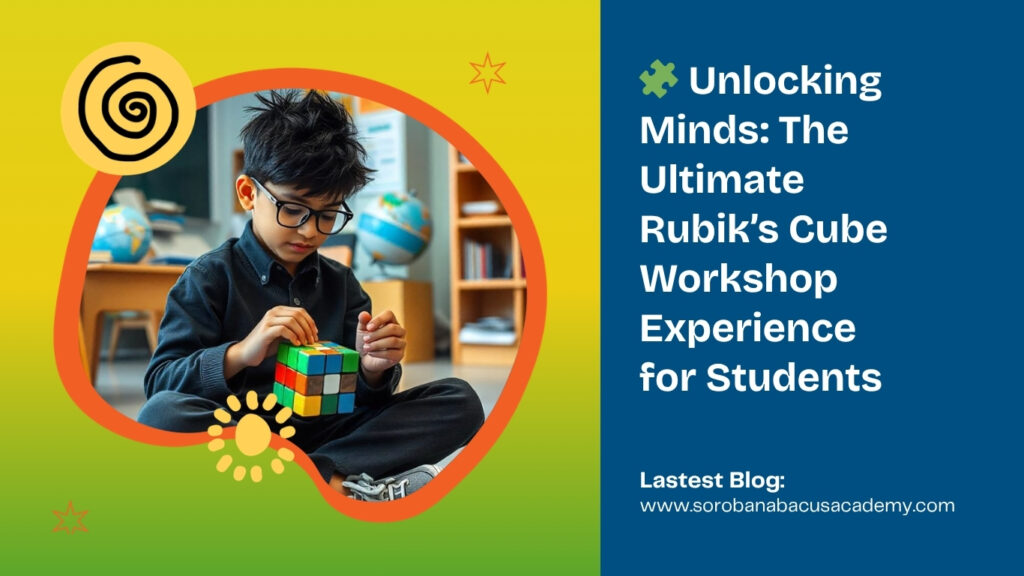
In today’s fast-paced world, students are constantly searching for activities that stimulate their minds while keeping them engaged. One such activity gaining tremendous popularity is the Rubik’s Cube Workshop Students. This interactive workshop is more than just a hobby; it is a platform to develop logical thinking, problem-solving skills, and patience. By introducing students to the vibrant world of colors, patterns, and algorithms, these workshops offer an innovative approach to learning that blends fun with education. Students not only learn how to solve the cube but also discover the cognitive strategies behind each move, making it a holistic growth experience.
🎯 Why Rubik’s Cube Workshops Are Transformative for Students
Rubik’s Cube workshops offer more than a puzzle-solving challenge. They engage multiple areas of the brain simultaneously, enhancing memory retention, spatial reasoning, and analytical thinking. Students actively develop strategies, plan moves ahead, and learn to adapt when solutions don’t work as expected. Additionally, these workshops foster perseverance, teaching students that every problem has a solution if approached systematically. The hands-on experience stimulates both the creative and logical parts of the brain, creating a perfect balance for cognitive development.
🧠 Cognitive Benefits of Solving Rubik’s Cube
Engaging in Rubik’s Cube Workshop Students sharpens memory, improves focus, and strengthens neural connections. Students train themselves to recognize patterns quickly, which translates into better problem-solving skills in academics. Moreover, learning algorithms enhances their ability to break down complex problems into manageable steps. Scientific studies show that such spatial exercises can boost mental agility, improve concentration, and even increase IQ scores over time. Students experience tangible improvements in cognitive performance when they regularly practice cube-solving techniques.
💡 Boosting Concentration and Focus
In classrooms where distractions are frequent, concentration is often the first skill to diminish. Rubik’s Cube workshops help students regain control over their attention span. Every twist and turn requires careful planning and observation. Students learn to focus on the task at hand, block out distractions, and stay committed until they reach a solution. This enhanced focus carries over to their studies and daily activities, helping them manage tasks more efficiently.
🎨 Creativity Meets Strategy
Although the Rubik’s Cube may seem like a rigid puzzle, it encourages immense creativity. Students explore multiple solutions and experiment with new approaches. Workshops often introduce techniques such as color mapping, algorithm design, and step-by-step problem solving. By encouraging creativity alongside strategy, students learn that innovation is not just about ideas but also about implementation. This combination of creativity and logical planning nurtures well-rounded thinkers.
👥 Teamwork and Collaborative Learning
Many workshops integrate group activities, where students solve cubes together or compete in friendly challenges. Collaborative learning encourages peer interaction, sharing of strategies, and group problem solving. Students develop communication skills, learn the value of cooperation, and celebrate collective achievements. Working in teams also boosts confidence, as students gain recognition for their problem-solving abilities in a supportive environment.
⏱ Time Management Skills
Rubik’s Cube workshops often include timed challenges to add excitement and competitiveness. Students learn to manage their time effectively, balancing speed with accuracy. They understand that rushing can lead to mistakes, while thoughtful planning saves time in the long run. These lessons extend beyond the workshop, helping students improve efficiency in academic and personal tasks.
🔍 Developing Analytical and Logical Skills
At the heart of cube-solving lies the art of analysis. Students must identify patterns, evaluate possible moves, and predict outcomes. Rubik’s Cube Workshop Students teach them to approach problems step by step, enhancing their logical reasoning. This methodical thinking is transferable to mathematics, science, and coding, where structured approaches are crucial.
🎉 Boosting Confidence Through Achievement
Completing a Rubik’s Cube is a satisfying accomplishment. Students feel a sense of achievement each time they successfully solve a puzzle. Workshops amplify this by celebrating milestones, awarding badges, or hosting competitions. This constant reinforcement boosts self-esteem and encourages students to take on new challenges with confidence.
🏆 Competitions and Challenges
Competitions in workshops motivate students to push their limits. Timed solves, team challenges, and advanced pattern recognition exercises make learning competitive yet enjoyable. Students learn to cope with pressure, handle mistakes gracefully, and celebrate wins responsibly. Such experiences prepare them for real-world challenges where quick thinking and adaptability are crucial.
💻 Integration of Technology
Modern workshops often incorporate technology such as apps, timers, and online tutorials. These tools enhance the learning experience, allowing students to track progress, learn new algorithms, and practice remotely. Digital integration ensures workshops remain engaging and cater to tech-savvy students who enjoy interactive experiences.
🧘 Mindfulness and Patience
Solving a Rubik’s Cube requires patience and persistence. Workshops teach students to stay calm under pressure, think methodically, and embrace failures as learning opportunities. This mindful approach reduces stress and anxiety, creating a meditative learning experience. Students carry these lessons into daily life, improving emotional resilience.
📚 Curriculum Enhancement
Schools and educational institutions are increasingly adopting Rubik’s Cube Workshop Students as part of extracurricular learning. These workshops complement academic curricula by strengthening critical thinking and analytical skills. They provide a practical application of logic and mathematics, making abstract concepts tangible and enjoyable.
🌟 Inspirational Role Models
Workshops often feature demonstrations by professional speedcubers. Seeing experts solve cubes in seconds inspires students, showing them what dedication and practice can achieve. These role models motivate students to practice regularly and push beyond their perceived limits, instilling a growth mindset.
🔗 Connecting STEM with Fun
Rubik’s Cube workshops bridge STEM (Science, Technology, Engineering, Mathematics) learning with hands-on fun. Students experience mathematical algorithms, geometric patterns, and logical problem solving in a playful environment. This seamless integration of learning and entertainment makes workshops highly effective and memorable.
📝 Practical Tips for Students
Students attending workshops can maximize learning by practicing daily, understanding algorithms, and experimenting with different solving techniques. Maintaining a journal of moves and patterns helps reinforce learning. Engaging in group discussions and peer problem-solving sessions enhances comprehension and builds a strong foundation for advanced cubing skills.
Conclusion
A Rubik’s Cube Workshop Students is more than an activity; it is a gateway to cognitive, emotional, and social development. Students not only learn to solve puzzles but also cultivate critical thinking, focus, creativity, teamwork, and patience. These workshops provide an enriching environment where learning meets fun, and every twist of the cube brings a new lesson. Whether in classrooms, clubs, or online platforms, Rubik’s Cube workshops are shaping future-ready minds who are prepared to tackle complex challenges with confidence and curiosity.